Science fiction has always pushed the boundaries of imagination, but in recent years, sci-fi & multiverse stories have become one of the most powerful storytelling trends in movies, comics, books, and streaming platforms.
From alternate timelines to parallel universes, multiverse narratives allow creators to explore endless possibilities — different versions of reality, alternate destinies, and complex philosophical questions about existence.
This article explains what sci-fi and multiverse stories are, why they are so popular, and how they are shaping modern storytelling.
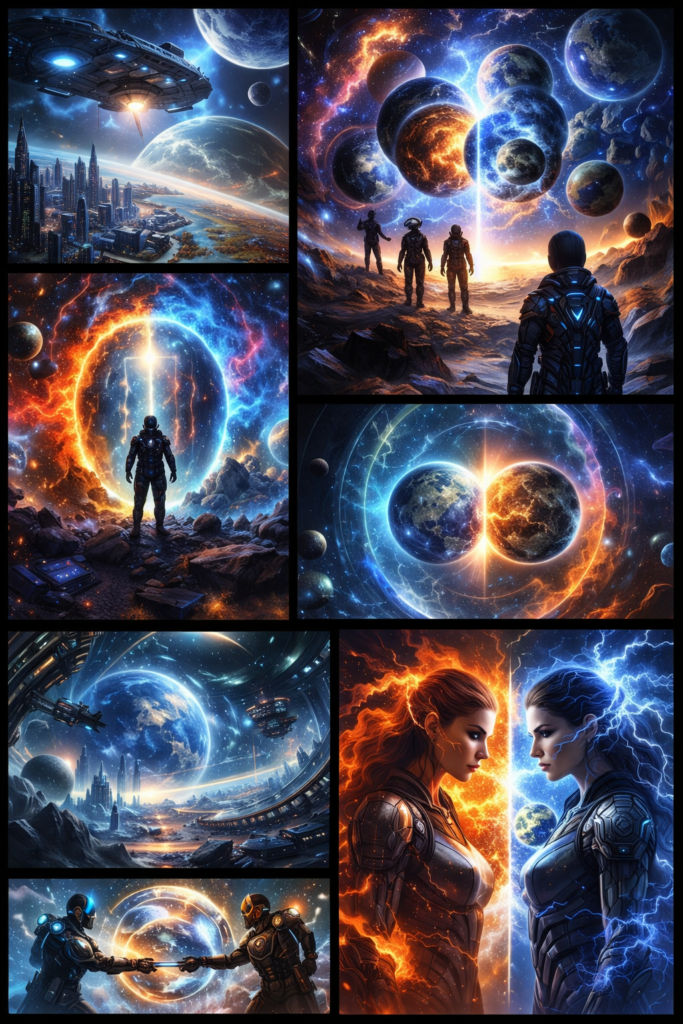
Table of Contents
- What Are Sci-Fi Stories?
- What Is a Multiverse in Storytelling?
- Why Sci-Fi & Multiverse Stories Are So Popular Today
- Famous Sci-Fi & Multiverse Story Examples
- Key Themes Found in Sci-Fi & Multiverse Stories
- The Science Behind Multiverse Theory
- Impact of Sci-Fi & Multiverse Stories on Pop Culture
- Future of Sci-Fi & Multiverse Storytelling
- FAQs About Sci-Fi & Multiverse Stories
- Conclusion
What Are Sci-Fi Stories?
Science fiction (sci-fi) is a genre based on imaginative concepts connected to science, technology, space exploration, artificial intelligence, and futuristic societies.
Core Elements of Science Fiction
- Advanced technology
- Space travel and alien civilizations
- Time travel concepts
- Artificial intelligence and robotics
- Scientific theories applied creatively
Sci-fi stories often explore how scientific progress affects humanity and society.
Purpose of Sci-Fi Storytelling
Science fiction is not only entertainment; it also:
- Predicts future possibilities
- Questions ethical dilemmas
- Explores human evolution
- Examines technological consequences
What Is a Multiverse in Storytelling?
A multiverse refers to the existence of multiple universes or realities existing simultaneously, each with different outcomes or versions of characters.
In multiverse storytelling, small changes can create entirely new realities.
Common Multiverse Concepts
- Parallel universes
- Alternate timelines
- Different character versions
- Reality collisions
- Dimensional travel
The multiverse idea is inspired partly by real theoretical physics concepts, making it appealing to both science enthusiasts and fiction fans.
Why Sci-Fi & Multiverse Stories Are So Popular Today
Unlimited Creative Possibilities
Writers are no longer restricted to one timeline or reality. Characters can evolve differently across universes, creating deeper storytelling layers. Audience Curiosity About “What If” Scenarios
Multiverse stories answer questions like:
- What if heroes made different choices?
- What if villains became heroes?
- What if reality itself changed?
These possibilities keep audiences emotionally invested. Expansion of Cinematic Universes
Modern film franchises have popularized interconnected storytelling, where multiple realities coexist and intersect.
Famous Sci-Fi & Multiverse Story Examples
Many iconic stories have shaped the popularity of the multiverse concept.
Movies and Film Universes
- Doctor Strange in the Multiverse of Madness explores alternate realities within a superhero universe.
- Everything Everywhere All at Once presents a philosophical and emotional take on infinite universes.
Television and Streaming Series
- Rick and Morty uses humor and science fiction to explore countless universes and realities.
Literature and Comics
Science fiction writers and comic creators have long experimented with alternate timelines, identity shifts, and cosmic storytelling.
Key Themes Found in Sci-Fi & Multiverse Stories
Identity and Self-Discovery
Characters confront alternate versions of themselves, raising questions about destiny and personal choices. Fate vs Free Will
Multiverse narratives challenge whether life outcomes are predetermined or shaped by decisions.
Technology and Responsibility
Advanced technology often becomes both a solution and a threat. Existential Philosophy
Stories explore deep questions such as:
- What defines reality?
- Does choice matter across infinite universes?
The Science Behind Multiverse Theory
While fictional stories exaggerate concepts, multiverse ideas are influenced by real scientific discussions in cosmology and quantum physics.
Scientists have proposed theories suggesting multiple universes may exist under certain physical conditions, although definitive proof remains unknown.
This blend of science and imagination makes sci-fi storytelling intellectually engaging.
Impact of Sci-Fi & Multiverse Stories on Pop Culture
The influence extends far beyond movies and books:
- Merchandise and collectibles
- Gaming universes
- Fan theories and communities
- Digital art and storytelling platforms
- Fashion inspired by sci-fi aesthetics
Multiverse storytelling has reshaped how audiences experience narratives — encouraging long-term engagement across multiple media formats.
Future of Sci-Fi & Multiverse Storytelling
The future looks promising as technology improves storytelling methods through:
- Virtual reality experiences
- Interactive narratives
- AI-generated storytelling worlds
- Expanded cinematic universes
Creators are increasingly blending emotional storytelling with scientific imagination, making the genre more immersive than ever.
FAQs About Sci-Fi & Multiverse Stories
Q1: What is the difference between sci-fi and multiverse stories?
Sci-fi is a broad genre involving science and futuristic concepts, while multiverse stories specifically focus on multiple realities or universes.
Q2: Are multiverse stories scientifically possible?
Some multiverse theories exist in physics, but they remain theoretical and unproven.
Q3: Why are multiverse movies so popular?
They allow creative storytelling, unexpected plot twists, and exploration of alternate character versions.
Q4: Do multiverse stories confuse audiences?
When written well, they enhance storytelling depth rather than create confusion.
Q5: Is multiverse storytelling a long-term trend?
Yes. It provides endless narrative possibilities, making it sustainable for future entertainment.
Conclusion
Sci-fi & multiverse stories represent the evolution of modern storytelling — combining scientific imagination with emotional depth and philosophical exploration. By allowing infinite realities and alternate possibilities, these narratives challenge audiences to rethink identity, destiny, and the nature of existence itself.
As technology advances and creative boundaries expand, sci-fi multiverse storytelling will continue to dominate entertainment, inspiring new generations of writers, filmmakers, and fans to imagine worlds beyond our own.